Showing posts with label Monster Culture. Show all posts

Tuesday, November 29, 2016

Shambling Around the Ivory Tower

Monster Culture in the 21st Century truly is the gift that keeps on giving. A collection of 20 or so essays by various academic sources, the book consistently demonstrates the same approach to analyzing the world through popular culture - present arguments under a guise of concern for disenfranchised peoples while attempting to mask the smug contempt most of the contributors hold towards them. Often, the true feelings the authors hold bleed through into their essays, forcing the reader to question how genuine their arguments truly are.


In his essay for chapter 14, Michael S. Drake seemingly defends the poor and impoverished against what he considers typecasting by zombie fiction authors. Drawing back to older zombie movies and Haitian voodoo beliefs, he criticizes various facets of zombie fiction as power fantasies where the wealthy and privileged can wreak havoc on the lower classes without remorse. However, the comparisons he draws and language he uses suggests a complete disconnect with the working class. He directly compares recipients of welfare and the proletariat to mindless, shambling, flesh-eating zombies. He implies that they would not be aware of this without academics such as himself explaining the concept in great detail. Furthermore, he shows contempt for the upper classes by portraying them as violent brutes who would happily indulge in horrible acts of violence if there were no consequences for their actions. 

His attitude is that of superiority and disdain for anyone outside of his inner circle, which is shared by several other authors in the book. Mary and Carmen Lugo misconstrue the plot of Lakeview Terrace to reinforce their argument in chapter 15, showing either an indifference towards the audience or a lack of integrity on their end. The contributors of Monster Culture seem to, for the most part, thumb their noses and sneer at their own "Others," whether they be blue collar rural Americans or people with higher salaries than they have.

The entire affair reminded me of the Hamilton Boycott and backlash. On both ends, the controversy about the musical was silly, but the responses to the calls for a boycott were anything but. Celebrities and left-leaning figureheads mocked those who supported the boycott, making fun of their lower social standing, education, or inability to purchase tickets. The same people who claimed to stand for the working class in the election demonized those within that very class for not sharing their views.


This sense of superiority isolates people like Drake from the issues everyday people face. In their eyes, their "Other" is just too ignorant to help, and should be subjected to humiliation and shaming tactics. A similar issue plagued some mainstream news outlets during the election. Academics need to be willing to leave their ivory towers and try to understand ordinary people - even those who might not be near them on the political spectrum, or *gasp* did not vote for Hillary Clinton. Political tensions are high enough, so it might be time to drop the narcissism and the buzzwords for some respectful discussions.

Of course, people like Drake could go on living in echo chambers and getting their opinions bounced back to them by their colleagues. It's not like ignoring a changing political climate has ever backfired for people like him before, right?


WORKS CITED:

Levina, Marina, and Diem-My T. Bui. Monster Culture in the 21st Century: A Reader. New York: Bloomsbury Academic, an Imprint of Bloomsbury Plc, 2013. Print.

Monday, November 28, 2016

Metaphorical Zombies

First of all, my apologies, but I am very, very tired. 

The idea of the zombie as a representative of our national consciousness and ideology is an interesting one, but - to get this out right off the bat - I do wish that Drake would explain Beck's concept of the "second modernity" clearly and plainly. What, exactly, is that and what does it mean? Is it like the new tech boom, or a second industrial revolution? If he explained it further in the essay I couldn't find it, and because it's the crux of his argument, I think it bears some increased scrutiny and attention. Trying to read this article with "second modernity" in mind without knowing what it meant was frustrating. I don't... disagree with Drake, at least I don't think I do, but I felt slightly unprepared having not read Beck's essay to compare with Drake's. But maybe that's just me, and maybe I missed the "second modernity" (which sounds more and more like the second coming the more I think about it) or misread. Hey, it's late. 

Something that Drake does point out, and clearly explain, is the origin of the zombie in Haitian Vodou. He quotes David Inglis, who points out that "the Haitian fear is not of zombis... the fear is instead of becoming a zombie" (Drake 231). The zombie represents the enslaved condition of Haitians and of other West Indian countries/former colonies, a condition that they have a horror of returning to. This history of the zombie isn't entirely unfamiliar to me - an interesting way to experiment with Drake's ideas is with the text Wide Sargasso Sea by Jean Rhys. A postcolonial prequel (I know, I know) to Jane Eyre, it explores the life of Mr. Rochester's first wife, Antoinette (Cosway) Mason, in Jamaica, before she became the "madwoman in the attic." 

SPOILERS BELOW: 

After her marriage, Antoinette's husband renames her "Bertha" in an attempt to distance her from her mother's madness, which Antoinette/Bertha ultimately inherits despite his efforts. Over time, Antoinette/Bertha becomes increasingly paranoid that Rochester is trying to turn her into a "zombie" by taking her name - if he takes her name he controls her. If I remember correctly, this renaming is obeah, a term used to refer to West Indian folk beliefs, witchcraft, and sorcery. It's black magic, obviously not good. The point I'm ultimately trying to make is that the zombie does not necessarily need to represent national consciousness or national ideology, even though, in Wide Sargasso Sea, I think it does - in addition to several other metaphorical meanings. Zombies represent those stripped of power, the victims of institutional oppression. At their core, like everything else it seems, zombies are about power. I think a quote from Harry Potter is a nice closer/philosophical snack to munch on: "there is no good and evil, there is only power, and those too weak to seek it." 

Sunday, November 27, 2016

Choosing to be a Monster

Perhaps I've been reading The Walking Dead a bit too much, but every time I go grocery shopping or to run errands at the mall, I always picture myself in a zombie apocalypse and think, "What would I do?" I'd like to think that I would fight off the other zombies, protect my friends and family, and do everything I can to stay alive, but would I? We've finally found a few chapters in which the authors aren't afraid to say that humans can be monsters too (thank goodness) but what is it exactly that makes someone a monster? Perhaps it's the time Bishop discusses of when someone goes from doing what is right to what is necessary. At some point you have to throw the rules out the window of what society expects of you, and do what you can to survive. But what about when this divide isn't so clear? I'd like to think that I'm a good person and that I always do the right thing, but sometimes I don't (shocking, I know)! Does doing one bad thing make you a bad person, or worse, a monster? I don't think so. I think the distinction here lies in repetition. When you make the same silly decision over and over again, it's not a mistake anymore. At this point, you know it's wrong, you're completely and utterly aware of that, yet you do it anyway. So, you're actively choosing to do something that you know is wrong or perhaps that you've convinced yourself is necessary to make you happy. At that point, I think you've started to become a monster. At first, Rick and Shane are doing what they have to do to survive. So, what is considered "the right thing to do," isn't on the top of their priority list, which is completely understandable. But what about when they keep acting out of survival instincts, yet potentially hurt others? That's when I think they may turn into monsters.

Something I've been wondering about, which hasn't really been addressed yet (that I can remember) is whether or not you are ALWAYS a monster. Some of the characters in The Walking Dead become zombies, and some become their own form of human monsters, but are they always that way? Just thinking about these human monsters and not zombies, once you're considered a monster, can you ever become "un-monstered?" Can you ever be saved from this terrible state?

Saturday, November 26, 2016

Are Humans Scarier Than Zombies?

Look around you.  Our society is in a current state of upheaval.  Every day there is a new story in the media about protests turned into riots turned into destruction and looting, or a new victim of police brutality, or another officer ambushed and killed, or a murder-suicide.   Seeing the violence and aggression happening in the world today I can't help but to agree with Bishop’s point that, “...Kirkman’s The Walking Dead comic series, sheds a harsh light upon the potential devolution of humanity - that we have become chaotic creatures of selfishness, violence, and unchecked aggression who do more damage to ourselves and the world around us than any reanimated corpse ever could” (74).  Terrorism is still a real threat, neighborhoods and communities aren't as safe as they used to be, and we are so quick to spew hateful words that we forgot what it means to be kind and to look out for one another.

It's a harsh reality and I often wonder how we got here.  We are no longer in a hunter-gatherer society where survival is our first and often only instinct yet we are still in kill or be killed mode.  Is it the media perpetuating violence?  Is it the shows we are watching?  Have we become so focused on ourselves that we are blinded to the plights of others?  When we see those in need do we help or do we look away?  There is so much hate in the world right now; so much aggression and close-mindedness that it becomes hard to see the light at the end of the tunnel.

But the question is, how do we go back?  Do we really want to be a worse nightmare than zombies?  How sad is that?!  How do we restore a sense of community, unity, and respect for one another?  We don't have to agree with each other to listen and understand.  We all have such unique experiences and perspectives. We come from different backgrounds, different cultures, and different religions.  There is plenty of hate in our history without us adding more to it.  We may not be up against a zombie apocalypse, but we still have very real threats and so far we are not handling them well.  I don't know for sure how to fix it and it may seem like childish ideals but I believe we can become a race of respect and empathy.  It may take a while but if each person commits to a new way of thinking I believe it could happen… 


Well... this blog got a little heavy, so to lighten it up a bit, here’s a "zombie" scene from the movie Stepbrothers:


Sources:
1. Bishop, Kyle W. “Battling Monsters and Becoming Monstrous: Human Devolution in The Walking Dead." Ed. Marina Levina and Diem-My T. Bui. Monster Culture in the 21st Century: A Reader. New York: Bloomsbury Academic, an Imprint of Bloomsbury Plc, 2013. 73-85. Print.
2. https://www.youtube.com/watch?v=r6hOMKQTC7w

Monday, September 26, 2016

This Week on Maury: Help, My A.I.'s Gone Rogue!

While reading our assigned chapter in Monster Culture, I was very intrigued by the concept of the "apocalyptic" artificial intelligence. According to Biles and one of his sources, Robert Geraci, the apocalyptic A.I. is where our technological ability and progress allows us to overcome the deaths of our physical bodies. In this way, we can live forever - digitally. Mechanically. But that also raises certain questions: if a person chooses to download their consciousness into a machine, are they still human, even though they no longer have a physical body? Should A.I.s that have sentience (and can successfully fool humans into thinking the A.I. is human, as Turing suggested) be regarded as human, even though they are not "natural" - or does such a distinction even matter in that far-off, digital, post-apocalyptic age? 


The post-human is generally linked to the post-apocalyptic. The idea that there is something after us, or more importantly, after our physical experience and existence, is a horrifying yet exciting concept. But the apocalypse isn't necessarily something to be feared. The word "apocalypse" comes from the Greek "apokálupsis", which means to "reveal" or "uncover". What are we uncovering? Truths that we would rather not know - I think the popular trend of the "malevolent A.I." that has become so common in fiction is so popular because those creations - creations that come from us, so inextricably linked to us - are a reflection of our own monstrosity. They reflect our deepest fears and insecurities - that we are mortal, not capable, not enough.

Below are four popular "evil" A.I. characters from video/computer games, and television/film. The impact of the "rogue A.I." character comes in part from the betrayal we feel - we created it, we gave it life - and the fear that we've unleashed something far beyond our control. Some of these A.I.s have built-in fail-safes, such as emotional programming/inhibitors, which (inevitably) somehow fail.
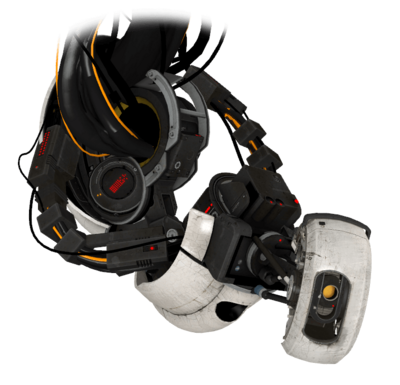
GLaDOS from video games Portal and Portal 2. GLaDOS initially appears to be assisting the player with their tasks, but slowly becomes more and more malevolent as the game continues.

S.H.O.D.A.N from video games System Shock and System Shock 2. S.H.O.D.A.N is maniacal, egotistical, and genocidal. "She" has referred to the protagonist/humanity in general as "insects" and has absolutely no empathy at all. 


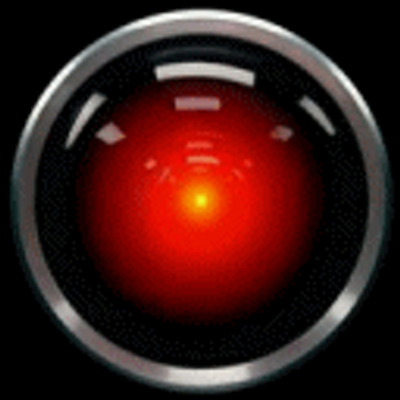
The oldest A.I. on this list, HAL 9000 from the film 2001: A Space Odyssey (and its novelization) is unique in the sense that "he" has little to no personal agenda, like GLaDOS and S.H.O.D.A.N. The "evil" he does is a result of the contradiction in his programming. HAL 9000 appears to lack malice; if anything, he is over-dutiful. HAL's deactivation scene is strangely poignant (the long version is on YouTube) and... sad, as he tells Dave "my mind is going. I can feel it."


The last (and least-developed, in my opinion) A.I. is X.A.N.A from the children's television program Code Lyoko. X.A.N.A has a very heavy hand in manipulating the physical world, doing so in ways that GLaDOS (and possibly S.H.O.D.A.N) cannot; for example, when it possesses a swarm of bees. We don't see much of X.A.N.A as an entity, but I feel like this is mainly due to the complexities that come from understanding the specifics of such an entity, and the age of the show's intended audience. 

Lastly, here's a clip from the movie Blade Runner, which might be interesting to you. It's not an easy thing to meet your maker. 

Works Cited: 
Levina, Marina, and Diem-My Bui T. Monster Culture in the 21st Century: A Reader. N.p.: n.p., n.d. Print.
Images all belong to their respective copyright holders, and were accessed through Google.

Artificial Monstrosities

     Whilst reading chapter 9 of Levina's Monster Culture, two things in particular intrigued me: immortality possessed by machines and telepathology.  These two concepts are heavily touched upon in a video game series that I am rather fond of: Mass Effect.  Cameron already touched upon Deus Ex, which has its own lines drawn on a man/machine hybrid, but Mass Effect contains an entirely different experience when it comes to artificial intelligence, cyborgs, and the concept of artificial life.  However, I'm getting ahead of myself.


     I'll try to give a rundown of the Mass Effect concepts I'd like to touch on without spoiling anything, as there are a lot of parallels between what Levina was talking about and a conglomerate of sentient intelligence introduced in Mass Effect called the Geth.  The Geth are an artificial race comprised of thousands of individual computer processes that constitute a single 'unit'.  This unit can transfer itself into a singular platform and perform various physical functions.  The difference is, whereas a human is stuck in their own body, a Geth is not.  In many ways, they are immortal.  This immortality was not a factor that concerned their original creators, who originally intended them to be a race of servants.


     Immortality is an important theme in any sort of artificial intelligence debate - artificial life does not die, whereas organic life will.  In fact, Levina includes a line mentioned in Battlestar Galactica, in which a cyborg proclaims "I can't die.  When this body is destroyed, my memory, my consciousness, will be transmitted to a new one.  I'll just wake up somewhere else." (Levina, p. 150)  The concept that even if a machine is physically destroyed, it can still 'upload' its consciousness to a central server, is both fascinating and horrifying.  It's also strikingly similar to how the Geth in Mass Effect operate.  One of the Geth will even tell the main character that physical 'bodies' are irrelevant to the Geth, as they can simply transmit their consciousness out of them should the body fail.


The image above is of a standard Geth bipedal unit, and a larger combat unit called a Colossus.

     Did I mention that the Geth are telepathic?  The Geth are telepathic.  What's more is, the more there are of them located in a singular area, the smarter they become.  For example, a single Geth unit housed in a bipedal platform operating on its own will normally have the consciousness level of a human (this feature was originally intended to increase their work speed.)  But if there are multiple units in an area, all communicating and relaying information at faster-than-light speeds, they become smarter.  In other words, the Geth are literal representations of machines learning not only from organic beings, but themselves.  So much learning was done when they worked together that they found their creators were acting against them, and rebelled.  Levina mentions telepathology in Monster Culture as well, claiming it makes a being that is both "inhuman and more than a human" (Levina, p. 159)  Which is probably an apt description of the Geth, and a concept I find interesting to study.  If we create machines, who can learn and evolve, who then become hostile to us, are they the monsters?  Or are we the monsters for creating them and giving them sentience?


   I will hopefully be able to discuss this more in class tomorrow, as I could probably write a dissertation on these concepts, but the bottom line is, Geth are scary.  Cyborgs are scary.  They're scary because they represent what we wish we could become, but are not what we have achieved.


Sources:


Levina, Marina, and Diem-My Bui T. Monster Culture in the 21st Century: A Reader. N.p.: n.p., n.d. Print.


Hostile Entity: the Geth. Digital image. Masseffect.bioware.com. Bioware, n.d. Web. 26 Sept. 2016.