First of all, my apologies, but I am very, very tired.
The idea of the zombie as a representative of our national consciousness and ideology is an interesting one, but - to get this out right off the bat - I do wish that Drake would explain Beck's concept of the "second modernity" clearly and plainly. What, exactly, is that and what does it mean? Is it like the new tech boom, or a second industrial revolution? If he explained it further in the essay I couldn't find it, and because it's the crux of his argument, I think it bears some increased scrutiny and attention. Trying to read this article with "second modernity" in mind without knowing what it meant was frustrating. I don't... disagree with Drake, at least I don't think I do, but I felt slightly unprepared having not read Beck's essay to compare with Drake's. But maybe that's just me, and maybe I missed the "second modernity" (which sounds more and more like the second coming the more I think about it) or misread. Hey, it's late.
Something that Drake does point out, and clearly explain, is the origin of the zombie in Haitian Vodou. He quotes David Inglis, who points out that "the Haitian fear is not of zombis... the fear is instead of becoming a zombie" (Drake 231). The zombie represents the enslaved condition of Haitians and of other West Indian countries/former colonies, a condition that they have a horror of returning to. This history of the zombie isn't entirely unfamiliar to me - an interesting way to experiment with Drake's ideas is with the text Wide Sargasso Sea by Jean Rhys. A postcolonial prequel (I know, I know) to Jane Eyre, it explores the life of Mr. Rochester's first wife, Antoinette (Cosway) Mason, in Jamaica, before she became the "madwoman in the attic."
SPOILERS BELOW:
After her marriage, Antoinette's husband renames her "Bertha" in an attempt to distance her from her mother's madness, which Antoinette/Bertha ultimately inherits despite his efforts. Over time, Antoinette/Bertha becomes increasingly paranoid that Rochester is trying to turn her into a "zombie" by taking her name - if he takes her name he controls her. If I remember correctly, this renaming is obeah, a term used to refer to West Indian folk beliefs, witchcraft, and sorcery. It's black magic, obviously not good. The point I'm ultimately trying to make is that the zombie does not necessarily need to represent national consciousness or national ideology, even though, in Wide Sargasso Sea, I think it does - in addition to several other metaphorical meanings. Zombies represent those stripped of power, the victims of institutional oppression. At their core, like everything else it seems, zombies are about power. I think a quote from Harry Potter is a nice closer/philosophical snack to munch on: "there is no good and evil, there is only power, and those too weak to seek it."
Showing posts with label Jacqueline Hase. Show all posts
Showing posts with label Jacqueline Hase. Show all posts
Monday, November 28, 2016

Monday, November 7, 2016
Chicken | Egg
So we have two-thirds of Frankenstein down, and one-third left to go. I feel like most people are familiar with the plot of the novel, in various degrees of depth, so I find it interesting to see how our familiarity with the narrative affects how we view and consider it. Warning: this post, argument-wise, might be a little inconsistent; I have a tendency to constantly debtate myself and I think it tends to show in class and in my blogs.
Frankenstein, as a novel, compels us to think outside our normal morals or ethics. Victor and his monster are the biggest examples of this - I feel sorry for Victor, but at the same time, I have to question why on earth he thought trying to make a person would be a good idea? He was so consumed with whether or not he could, he didn't really stop to think if he should. He loses loved ones, but he readily belives that it is, ultimately, his own fault - whether it is or isn't is up for us to decide. Either way, I feel that this is the number one lesson of Frankenstein, folks: know your limits.
I feel pity for Frankenstein's monster, which I think he would find irritating. He is a lot like Grendel, in a way - ugly, unloved (although Grendel had his mom) by men, excluded and shunned - yet I don't find myself feeling as sorry for him as I think I could? I don't know why, and I can't explain it - there's just something about him (maybe his entitlement?), and I can't quite put my finger on it.

A big theme of Frankenstein is, overall, the idea of blame. Who is to blame for what happens? It's a complex question, and it has no easy answer. I would argue Frankenstein's monster is as much a victim of Victor as William and Justine are victims of the monster himself, but does that excuse his (the monster's) actions? His history might help explain him, but is it a reason for what he does? Does Frankenstein's monster ever stop being a victim of Frankenstein's machinations even when he takes revenge on him? Like I said: who is to blame? It's a variant of the eternal question: which came first, the chicken or the egg?
Another theme I've noticed in the book, and one I've not really thought through completely yet, is how trauma seems to perpetuate trauma. Where does that cycle end, and how did it start?
Frankenstein, as a novel, compels us to think outside our normal morals or ethics. Victor and his monster are the biggest examples of this - I feel sorry for Victor, but at the same time, I have to question why on earth he thought trying to make a person would be a good idea? He was so consumed with whether or not he could, he didn't really stop to think if he should. He loses loved ones, but he readily belives that it is, ultimately, his own fault - whether it is or isn't is up for us to decide. Either way, I feel that this is the number one lesson of Frankenstein, folks: know your limits.
I feel pity for Frankenstein's monster, which I think he would find irritating. He is a lot like Grendel, in a way - ugly, unloved (although Grendel had his mom) by men, excluded and shunned - yet I don't find myself feeling as sorry for him as I think I could? I don't know why, and I can't explain it - there's just something about him (maybe his entitlement?), and I can't quite put my finger on it.
FRANKENSTEIN'S MONSTER:
SAME. We've all been there, right?
A big theme of Frankenstein is, overall, the idea of blame. Who is to blame for what happens? It's a complex question, and it has no easy answer. I would argue Frankenstein's monster is as much a victim of Victor as William and Justine are victims of the monster himself, but does that excuse his (the monster's) actions? His history might help explain him, but is it a reason for what he does? Does Frankenstein's monster ever stop being a victim of Frankenstein's machinations even when he takes revenge on him? Like I said: who is to blame? It's a variant of the eternal question: which came first, the chicken or the egg?
Another theme I've noticed in the book, and one I've not really thought through completely yet, is how trauma seems to perpetuate trauma. Where does that cycle end, and how did it start?
Monday, October 24, 2016
Monsters All, Are We Not? Grendel, Grendel's Mother, and Caliban
So, now we're two-thirds of the way through Beowulf, and I'm not quite sure how I'm feeling? A little... off, I guess? Unlike a lot of people in this class, this is my first time reading Beowulf, so now I have a taste of the confusion people have been feeling for the past few weeks.
I have to say I expected the story to end after Beowulf defeated Grendel's mother - and isn't that, in and of itself, so interesting? Beowulf's toughest foe is a woman, a mother, who is avenging her son. It's such an interesting comment, and it can be taken (at least) two ways - on one hand, Grendel's mother is powerful and her vengeance has "legitimate" motivations; she's not killing for funsies or because some jocks were mean and loud and annoying. Beowulf killed her son and desecrated his body (although Grendel's mother is dead when that happens, but I digress). If you killed my son and chopped the head off his corpse, I'd be coming after you too.
On the other hand, Grendel's mother is a monster. Presumably this translates to her physical appearance - her unnatural strength and invulnerability is certainly abnormal. There's a weird interplay and conflict between the ideals of femininity and monstrosity, where Grendel's mother's, well... motherhood is her most feminine trait, and is contrasted with her physical strength, bloodlust, and desire for vengeance, all of which are/were considered traditionally unfeminine. So the sharp divide between what actions are/were considered acceptable for women to perform and what Grendel's mother actually does would certainly make her a monster to the Scyldings and Geats (she falls on the "wrong" side of the line); to us, I think, she's a little more understandable.
(There's also the unspoken question of how her Cain-ancestry inherently damns her, but we won't talk about that now.)
What's also interesting is how the idea of vengeance is gendered in Beowulf. Beowulf himself is fighting on Hrothgar's behalf; he's obtaining Hrothgar's vengeance for him - but something that struck me was how Beowulf's hatred of Grendel also felt strangely personal. I feel like there's this subtextual idea that Beowulf's vengeance is somehow more legitimate, or more acceptable, than Grendel's mother's - whether it's because he's doing it on behalf of someone else (but is he?) makes it inherently unselfish, or if it's because he's a man fighting a monster, I'm not sure. Is the vengeance of Grendel's mother considered more monstrous, or less legitimate, because she is a woman? Does her revenge make her monstrous, or does her monstrosity make her vengeful? Could it be both?
The last point I want to bring up are the parallels I saw between Grendel and Grendel's mother in Beowulf, and Caliban and Sycorax in The Tempest. Despite the audience never seeing Sycorax, her influence in the play is pervasive, and she and her son are both considered monsters by Prospero, who I consider (loosely and without much basis) roughly analogous to Beowulf. Beowulf is an old story, and it has many archetypal traits that have filtered down through the ages, to Shakespeare's time and beyond.
I have to say I expected the story to end after Beowulf defeated Grendel's mother - and isn't that, in and of itself, so interesting? Beowulf's toughest foe is a woman, a mother, who is avenging her son. It's such an interesting comment, and it can be taken (at least) two ways - on one hand, Grendel's mother is powerful and her vengeance has "legitimate" motivations; she's not killing for funsies or because some jocks were mean and loud and annoying. Beowulf killed her son and desecrated his body (although Grendel's mother is dead when that happens, but I digress). If you killed my son and chopped the head off his corpse, I'd be coming after you too.
On the other hand, Grendel's mother is a monster. Presumably this translates to her physical appearance - her unnatural strength and invulnerability is certainly abnormal. There's a weird interplay and conflict between the ideals of femininity and monstrosity, where Grendel's mother's, well... motherhood is her most feminine trait, and is contrasted with her physical strength, bloodlust, and desire for vengeance, all of which are/were considered traditionally unfeminine. So the sharp divide between what actions are/were considered acceptable for women to perform and what Grendel's mother actually does would certainly make her a monster to the Scyldings and Geats (she falls on the "wrong" side of the line); to us, I think, she's a little more understandable.
(There's also the unspoken question of how her Cain-ancestry inherently damns her, but we won't talk about that now.)
What's also interesting is how the idea of vengeance is gendered in Beowulf. Beowulf himself is fighting on Hrothgar's behalf; he's obtaining Hrothgar's vengeance for him - but something that struck me was how Beowulf's hatred of Grendel also felt strangely personal. I feel like there's this subtextual idea that Beowulf's vengeance is somehow more legitimate, or more acceptable, than Grendel's mother's - whether it's because he's doing it on behalf of someone else (but is he?) makes it inherently unselfish, or if it's because he's a man fighting a monster, I'm not sure. Is the vengeance of Grendel's mother considered more monstrous, or less legitimate, because she is a woman? Does her revenge make her monstrous, or does her monstrosity make her vengeful? Could it be both?
The last point I want to bring up are the parallels I saw between Grendel and Grendel's mother in Beowulf, and Caliban and Sycorax in The Tempest. Despite the audience never seeing Sycorax, her influence in the play is pervasive, and she and her son are both considered monsters by Prospero, who I consider (loosely and without much basis) roughly analogous to Beowulf. Beowulf is an old story, and it has many archetypal traits that have filtered down through the ages, to Shakespeare's time and beyond.
Monday, September 26, 2016
This Week on Maury: Help, My A.I.'s Gone Rogue!
While reading our assigned chapter in Monster Culture, I was very intrigued by the concept of the "apocalyptic" artificial intelligence. According to Biles and one of his sources, Robert Geraci, the apocalyptic A.I. is where our technological ability and progress allows us to overcome the deaths of our physical bodies. In this way, we can live forever - digitally. Mechanically. But that also raises certain questions: if a person chooses to download their consciousness into a machine, are they still human, even though they no longer have a physical body? Should A.I.s that have sentience (and can successfully fool humans into thinking the A.I. is human, as Turing suggested) be regarded as human, even though they are not "natural" - or does such a distinction even matter in that far-off, digital, post-apocalyptic age?
The post-human is generally linked to the post-apocalyptic. The idea that there is something after us, or more importantly, after our physical experience and existence, is a horrifying yet exciting concept. But the apocalypse isn't necessarily something to be feared. The word "apocalypse" comes from the Greek "apokálupsis", which means to "reveal" or "uncover". What are we uncovering? Truths that we would rather not know - I think the popular trend of the "malevolent A.I." that has become so common in fiction is so popular because those creations - creations that come from us, so inextricably linked to us - are a reflection of our own monstrosity. They reflect our deepest fears and insecurities - that we are mortal, not capable, not enough.
Below are four popular "evil" A.I. characters from video/computer games, and television/film. The impact of the "rogue A.I." character comes in part from the betrayal we feel - we created it, we gave it life - and the fear that we've unleashed something far beyond our control. Some of these A.I.s have built-in fail-safes, such as emotional programming/inhibitors, which (inevitably) somehow fail.
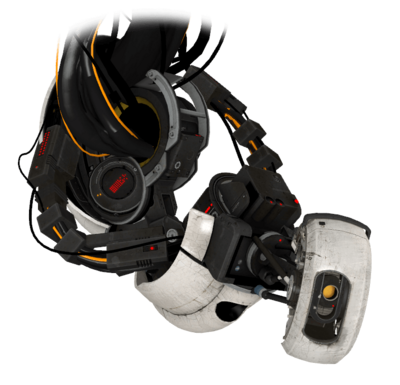 GLaDOS from video games Portal and Portal 2. GLaDOS initially appears to be assisting the player with their tasks, but slowly becomes more and more malevolent as the game continues.
 S.H.O.D.A.N from video games System Shock and System Shock 2. S.H.O.D.A.N is maniacal, egotistical, and genocidal. "She" has referred to the protagonist/humanity in general as "insects" and has absolutely no empathy at all.
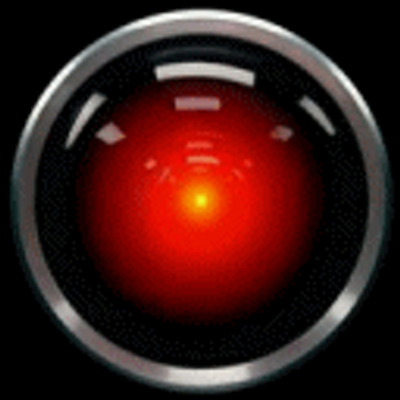 The oldest A.I. on this list, HAL 9000 from the film 2001: A Space Odyssey (and its novelization) is unique in the sense that "he" has little to no personal agenda, like GLaDOS and S.H.O.D.A.N. The "evil" he does is a result of the contradiction in his programming. HAL 9000 appears to lack malice; if anything, he is over-dutiful. HAL's deactivation scene is strangely poignant (the long version is on YouTube) and... sad, as he tells Dave "my mind is going. I can feel it."
 The last (and least-developed, in my opinion) A.I. is X.A.N.A from the children's television program Code Lyoko. X.A.N.A has a very heavy hand in manipulating the physical world, doing so in ways that GLaDOS (and possibly S.H.O.D.A.N) cannot; for example, when it possesses a swarm of bees. We don't see much of X.A.N.A as an entity, but I feel like this is mainly due to the complexities that come from understanding the specifics of such an entity, and the age of the show's intended audience.
Lastly, here's a clip from the movie Blade Runner, which might be interesting to you. It's not an easy thing to meet your maker.
Works Cited:
Levina, Marina, and Diem-My Bui T. Monster Culture in the 21st Century: A Reader. N.p.: n.p., n.d. Print.
Images all belong to their respective copyright holders, and were accessed through Google.
The post-human is generally linked to the post-apocalyptic. The idea that there is something after us, or more importantly, after our physical experience and existence, is a horrifying yet exciting concept. But the apocalypse isn't necessarily something to be feared. The word "apocalypse" comes from the Greek "apokálupsis", which means to "reveal" or "uncover". What are we uncovering? Truths that we would rather not know - I think the popular trend of the "malevolent A.I." that has become so common in fiction is so popular because those creations - creations that come from us, so inextricably linked to us - are a reflection of our own monstrosity. They reflect our deepest fears and insecurities - that we are mortal, not capable, not enough.
Below are four popular "evil" A.I. characters from video/computer games, and television/film. The impact of the "rogue A.I." character comes in part from the betrayal we feel - we created it, we gave it life - and the fear that we've unleashed something far beyond our control. Some of these A.I.s have built-in fail-safes, such as emotional programming/inhibitors, which (inevitably) somehow fail.
Lastly, here's a clip from the movie Blade Runner, which might be interesting to you. It's not an easy thing to meet your maker.
Works Cited:
Levina, Marina, and Diem-My Bui T. Monster Culture in the 21st Century: A Reader. N.p.: n.p., n.d. Print.
Images all belong to their respective copyright holders, and were accessed through Google.
Monday, September 12, 2016
Comics, Space, and Star Wars
When Scott McCloud began to set the record straight in Chapter 1, he brought up one specific point that I thought was particularly interesting. Here's the quote - or dialogue, I guess:
Central to the idea of the comic is the concept of sequence. There is an order to pictures/words/images/events/etc that gives them meaning. The narrative of a particular text is meaningful because of the sequences that interact (plot, characterization, the various nuts and bolts of a story) inside of it. It's progressive - image A leads to image B leads to image C (for example), and so on and so forth. Long story short: a sequence makes a narrative.
It doesn't even have to be a linear narrative - the sequence that makes up a non-linear narrative is still a linear sequence, because time is still just one of the thing that make up a text. Star Wars is actually a great example of this: narratively, it opens in media res, but A New Hope is the first movie sequentially - even though it is fourth in the timeline.
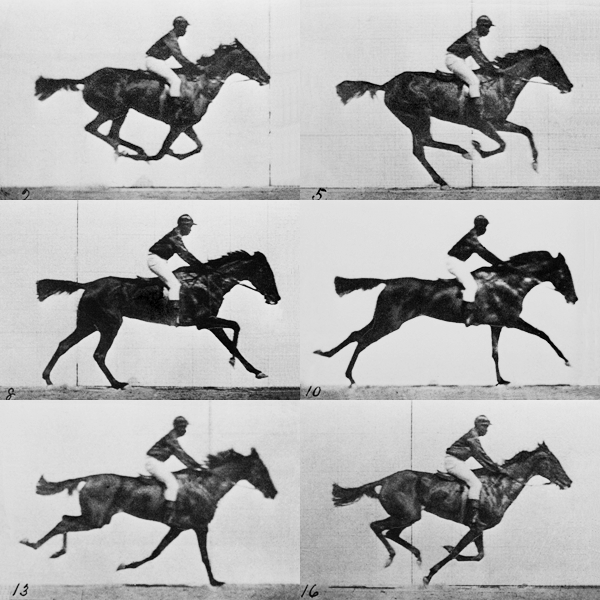
McCloud brings up the idea that "space does for comics what time does for film" (pg. 7) Comics are spatially sequenced; the space between them is the sequence. Comic action happens in the blank lines between each frame. To help myself visualize this, I remembered my junior year of high school, when I had to learn about early photography in either Photo 2 or AP Art History. Here are the frames of Eadweard Muybridge's work with horse racing:
(A random aside: I was thinking about how so many comics are adapted to film, and I began to wonder if filmmakers in general don't like to read comics because comics are so reminiscent of storyboards - maybe almost like comics are unfinished, unrefined bits of a larger work? Or maybe they like to read them for much the same reason? I'm not sure. Who knows?)
Sources:
McCloud, Scott. Understanding Comics:. New York: Harper Perennial. 1994.18. Print.
"Taken individually, the pictures below [not pictured] are merely that - pictures. However, when part of a sequence, even a sequence of only two, the art of the image is transformed into something more..." (pg. 5)
Central to the idea of the comic is the concept of sequence. There is an order to pictures/words/images/events/etc that gives them meaning. The narrative of a particular text is meaningful because of the sequences that interact (plot, characterization, the various nuts and bolts of a story) inside of it. It's progressive - image A leads to image B leads to image C (for example), and so on and so forth. Long story short: a sequence makes a narrative.
It doesn't even have to be a linear narrative - the sequence that makes up a non-linear narrative is still a linear sequence, because time is still just one of the thing that make up a text. Star Wars is actually a great example of this: narratively, it opens in media res, but A New Hope is the first movie sequentially - even though it is fourth in the timeline.
(messing with your preconceived notions about narrative and timelines since 1977)
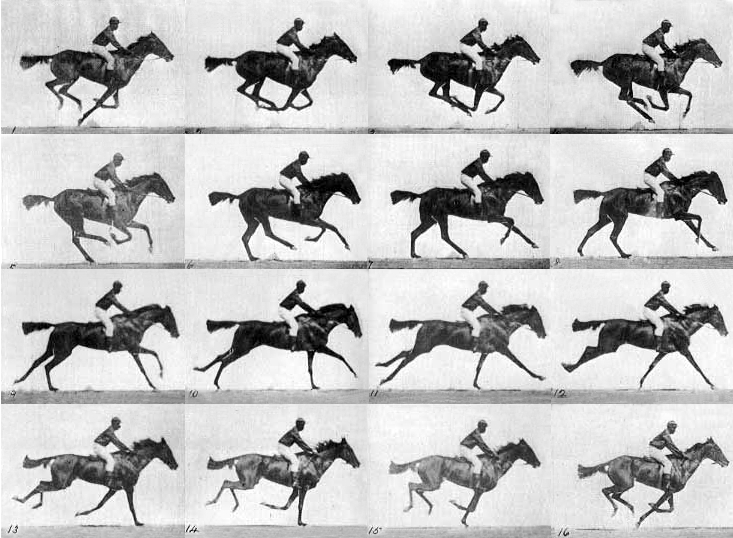
McCloud brings up the idea that "space does for comics what time does for film" (pg. 7) Comics are spatially sequenced; the space between them is the sequence. Comic action happens in the blank lines between each frame. To help myself visualize this, I remembered my junior year of high school, when I had to learn about early photography in either Photo 2 or AP Art History. Here are the frames of Eadweard Muybridge's work with horse racing:
Eadweard Muybridge, Human and Animal Locomotion series, 1887
Now here's the same thing, only animated:
(same citation, but accessed on Wikipedia)
There's still a gap from point A to point B. If you look at the sheet (if you want to call it a storyboard, I guess you could - I'm pretty sure there's a term for all those frames lined up, but I can't remember what it is) you see that there's missing action - we don't see the horse's leg go from straight to bent. That's action we missed, that we didn't see. The meaning is not only in points A and B, but how we get there, the space that makes them different.
(A random aside: I was thinking about how so many comics are adapted to film, and I began to wonder if filmmakers in general don't like to read comics because comics are so reminiscent of storyboards - maybe almost like comics are unfinished, unrefined bits of a larger work? Or maybe they like to read them for much the same reason? I'm not sure. Who knows?)
Sources:
McCloud, Scott. Understanding Comics:. New York: Harper Perennial. 1994.18. Print.
Subscribe to:
Posts (Atom)